Growing Wheat in Corn Country
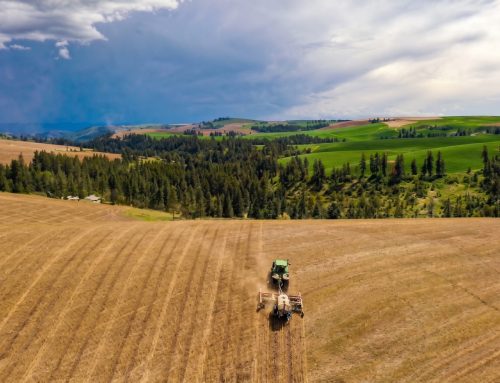
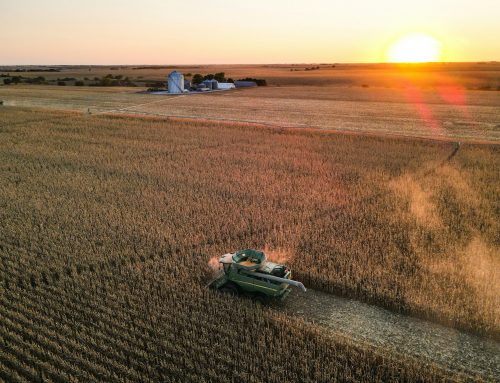
In southwest Iowa, corn and soybeans run the show. Wheat? Not so much among the highly erodible hills and terraces of the Omaha-Council Bluffs area.
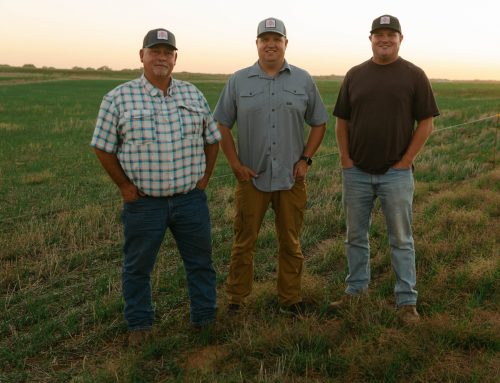
The story’s no different at Witt Brothers Farms, located in Pottawattamie County. The farm has no livestock to speak of. Like most Iowan farms, you won’t find them harvesting fields of wheat either. That is, until owners Johnny and Jeremy Witt got a wild idea. What if they planted some?
They took the thought to Todd Carlton, the agronomist who works with the farm. As Todd remembers it, the pitch was short.
“Hey, we want to plant some wheat. We’ve never done it. You have some experience from your past, and what do you think we ought to do?”
If you were going to pick someone to make wheat work in Iowa, you’d be hard-pressed to find a better fit than Todd. A friend of the Witts since he sold them inputs at a co-op in 2011, he has eighteen years in ag and a stretch of working in Europe’s wheat fields under his belt. He and the Witts later farmed together in Texas for a few years before everyone landed back in Iowa in 2020. They clicked early, he says.
“We’re about the same age, and we just really gravitated towards each other.”
Their assignment was deceptively simple. Get a crop most Iowa farmers wouldn’t touch to pay off. It fits how the Witts work. They’ve run see-and-spray technology, and Todd is partnered in a biostimulant business, so there’s no shortage of new things to try. The rule, though, is to start small.
“There’s really not a limit to what we’re willing to try if it makes sense,” Todd says. “We’ll try it at a small scale, and then if it really adds up, we’ll scale it up for the rest of the operation.”
The plan was to double crop, with soybeans going in behind the wheat in the same season, so every week counted. Todd went looking for shortest-season wheat varieties he could find, and he kept coming back to LCS Atomic AX, a hard red winter wheat Texas A&M’s variety guide rates as early maturing. He toyed with others, LCS Warbird AX among them, but the calendar kept pulling him back. An early frost in Iowa can show up whenever it likes and the beans still had to mature.
The problem is, Iowa offered little in the way of variety data. So Todd built his own case.
“There’s a little bit of research, but it’s not enough to hang your hat on,” he explains.
He called friends in Oklahoma, talked to LCS’s Dan Dall, and bought through a Kansas dealer, Kauffman Seeds. What led him to Limagrain Cereal Seeds, he says, was how much information he could gather. He wanted certified seed with some history behind it. It was too big a gamble to play with something with no track record.
“I knew LCS was really good at small grains,” Todd explains. “When you look at their history, it was just a level of comfort I kind of needed going into it.”
That kind of call comes from a career in the fields. Todd started in the ag business in 2009, and he says what he learned early is that “experience was everything.” Not all of it was good, and “you learn from your trials and errors,” but over time it builds the confidence to decide with little to go on.
“It was really about gaining that experience to be able to make decisions with very little information, and have a decent confidence level that we’re going to get the outcome that we’re looking for,” Todd says.
Todd brought his European experience to the Iowa fields, along with a willingness to push the wheat harder than most farmers would think to. That meant multiple passes and a lot of care.
“I was very accustomed to a European style of growing wheat. Since we had the soil type and the conditions, it just felt appropriate to really try to push it, and it really paid dividends,” he says.
The ground is part of the story. The hills around the farm are loess soils, which Todd describes as glacial dust that settled. Coming from East Texas, West Texas, and the Oklahoma Caprock, he says they still surprise him.
“They’re highly erodible, but it’s their holding capacity, their forgiveness,” he recalls. “It still just shocks me what these guys can do on these hills.”
Iowa’s cold took out some acres, and those went to corn. On the acres they kept, the wheat came off before July 1, the beans went in behind it, and yields topped 130 bushels an acre.
“It made me look like a rock star,” Todd says.
Having never grown wheat in this part of the world, Todd couldn’t know what the grass pressure would be. Brome and foxtail creep in from the terraces. LCS Atomic AX carries the CoAXium trait, which lets a grower spray grass out of the wheat, so he had an answer ready if he needed one.
He didn’t.
The grain came in clean, with excellent protein and nothing for the elevator to dock. Todd didn’t have to use the trait this year, but that doesn’t mean he won’t this fall or next spring. He treats a tool like that as risk management, and says that’s the point.
“If I can keep that in my back pocket in the time of need, that takes a lot of stress off of us,” Todd says.
This fall, the Witts added LCS Valiant. Todd would have kept it simple, since they aren’t planting a crazy number of acres, but the Witts wanted to try a couple of others. So he put LCS Atomic AX on the field with shatter cane and brome along the edges.
“I had to make sure to remind them to plant Atomic all in one field, because if we did have any grass issues, we didn’t want to kill the other wheat,” Todd explains.
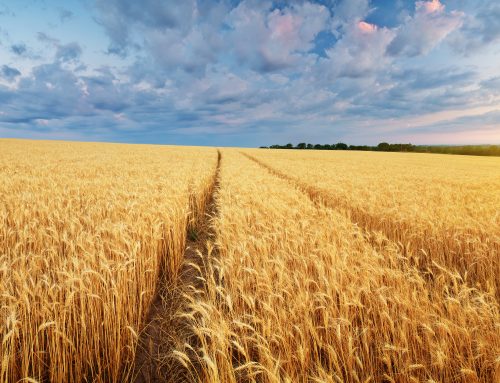
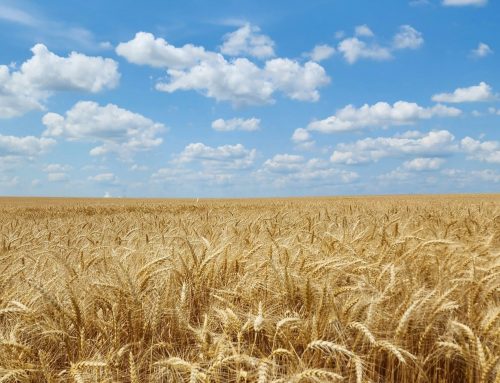
Out where wheat isn’t the norm, a field of gold stalks turns heads. Plenty of people did come look. One livestock operator down the road even called to ask what they were planting. Now, he’s trying his hand at LCS Atomic AX this fall.
That domino effect speaks to Todd’s whole approach, and he can’t see why more farmers don’t give it a try when the yields are there.
“We have elevators that’ll take wheat, so it’s kind of crazy that more people don’t give it a shot than they do,” he says.
The agronomist is already adjusting for round two, planting a little earlier and a little deeper to cut down on winter kill. He’s confident in what the variety can do.
And the Witts plan to keep going too. Todd points to soil health benefits and the flexibility of a third crop. Wheat comes off in the middle of summer, which opens a window: if the ground needs dirt work, they can skip the double-crop beans and get to it, and that’s a nice-to-have in your back pocket in a place where the soil freezes feet deep in winter.
“Just having that flexibility of that third crop, it’s really helped a lot,” he says. “We get to harvest a little bit in the middle of the summer, and you get to scratch a lot of itches with having a different crop. So it’s super fun.”
Ask him who deserves the credit, and he’s quick to point at Johnny and Jeremy. They’re the ones who write the check, he says.
“They also took the leap of faith. They just had me as a tool in their toolbox to help them facilitate this experiment.”
Find an LCS dealer like Witt Brothers Farms near you with our Dealer Finder.