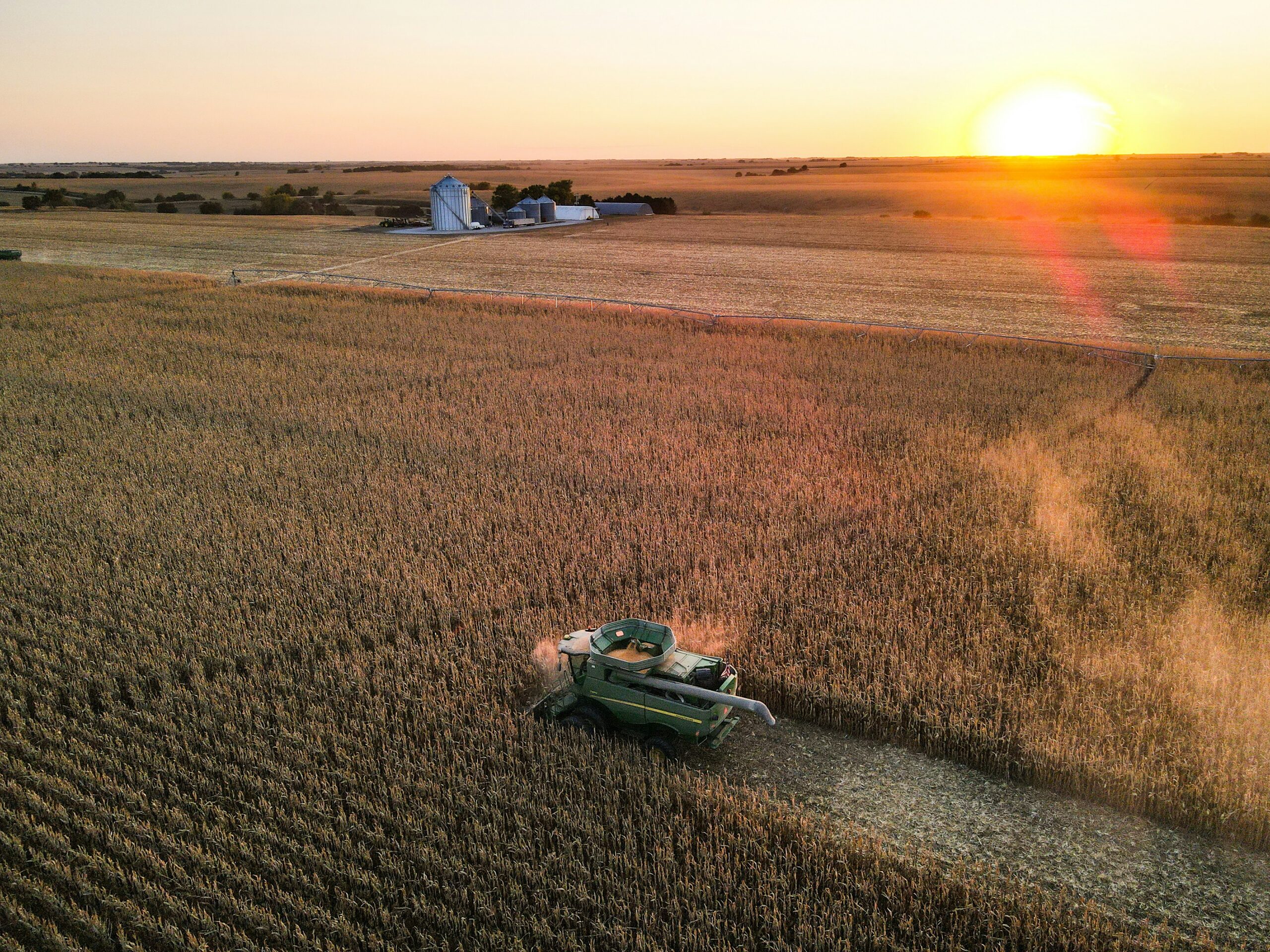
A Legacy Six Generations Strong
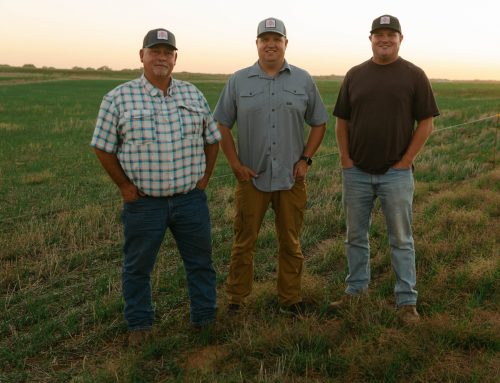
Blake Inman and his wife, Danae, are the fifth generation on her family’s farm near Berthold, North Dakota, ground the Birdsalls have worked since 1905.
On the day we caught up with Blake, the small grains harvest was wrapped up and the seed plant was running. He’d finished a big run of LCS Rimfire the day before, and with a Northern Plains winter around the corner, getting ahead is the goal.
“It feels like a long time until April right now, but you never know what winter is going to bring you,” Blake says. “You might have a week where you don’t get a lot of work done. It’s nice to get ahead when you can.”
Birdsall Grain & Seed’s primary business started with Blake’s father-in-law, Mark, who raised his first seed crop in 1981 and built the first seed plant in the early 1990s. Nearly all of its small grains, plus flax, field peas, and barley, are raised for seed. Canola and corn rotate through and head to market. Today, it’s a couple of cleaning plants, a full agronomy center, and about 25 people at the peak of the season.
It’s grown a lot since Blake joined — both the family and the business. And there’s a reason.
“When you’re selling spring wheat to somebody, that’s a once-a-year sale,” he explains. “Expanding that operation gives you more touch points to that customer, gets you a better feel for their operation, and allows you to service them better.”
It’s a different game than most of ag retail. Corn seed comes in and goes out, and if something’s wrong with it, there’s somebody else to point to. Wheat seed doesn’t work that way.
“Something’s wrong with a load of wheat seed. It’s pretty much your deal,” Blake says.
So Birdsall treats every step with the appropriate weight, from planting through harvest. Varieties stay separate. Contamination stays out.
“Being a family-owned business, so to speak, you’ve got skin in the game.”
That includes the earliest stages of a variety’s life. Birdsall does a lot of new-generation production, breeder to foundation lots, for Limagrain Cereal Seeds and other seed companies too. With the newer generations, the seed might even be headed to an LCS customer for their own business.
Birdsall has been working with LCS varieties since the early days, and Blake still picks from the older ones alongside the new. With each new release, it comes down to a bit of foresight.
“As they’re developing new varieties, we try to look at our crystal ball, so to speak, and pick varieties that fit our growers and fit our region and area,” he says.
Hard red spring wheat is the main LCS crop Birdsall raises, which makes sense in a state that plants about half of the nation’s spring wheat acres. The draw is Limagrain’s worldwide reach. Plenty of breeding companies work in the United States, but being able to draw on crosses from all over the world gives you “a little extra something,” in Blake’s words.
But the real test is balance. In spring wheat country, farmers want yield, and they still want protein. The mills and bakers want milling and baking quality. LCS works both ends.
“You’ve got to provide a product that somebody is willing to pay for, whether it’s domestically or in the export market,” Blake says.
LCS’s size works in Birdsall’s favor, too.
“It’s got kind of a small company feel, but with a very large net of people that they can draw on to help them succeed,” Blake says.
The sawfly is a good example. Parts of northwest North Dakota have been struggling with them the last few years. Solid-stem varieties are the easiest way to fight them, but sawflies aren’t an every-year problem, so breeders haven’t always built for it.
“Limagrain is one of the first ones to try to work on that problem when it was brought forward,” Blake says.
Blake likes where the wheat crop is headed. The technology and money corn and soybeans have seen for years is finally showing up in wheat.
“We’ve seen a lot of the technological advancements and the money spent in corn and soybeans over the years, and I think we’re finally starting to see that come to fruition in wheat.”
He’ll soon have fresh eyes on it. His son, Owen, started farming with the family last year and is now a freshman studying farm management. If you’re counting, that makes six generations of Birdsalls out on these fields.
A couple of months into school, Owen is already full of new things he’s learning and ideas of his own, and there was never any question about where he was headed.
“He’s loved agriculture since he can remember. There’s been no doubt what he’s ever wanted to do,” Blake says. “It’s very fun now to see someone with a different perspective, from a different generation.”
From paperwork to planting to packaging, it’s an all-hands family affair at Birdsall Grain & Seed. It has to be to keep a legacy this long going. Sure, Blake says, it comes with its challenges, but what comes out of it is worth the work.
“It’s a business, and I run it like one. But it’s also kind of a livelihood and a lifestyle. You’ve got to like it. If you don’t like it, it’s gonna be pretty miserable,” Blake says. “At the end of the day, it is very, very fun to work with your family.”
Connect with a local dealer like Blake and Birdsall Grain & Seed with our Dealer Finder.