Showing Your Work
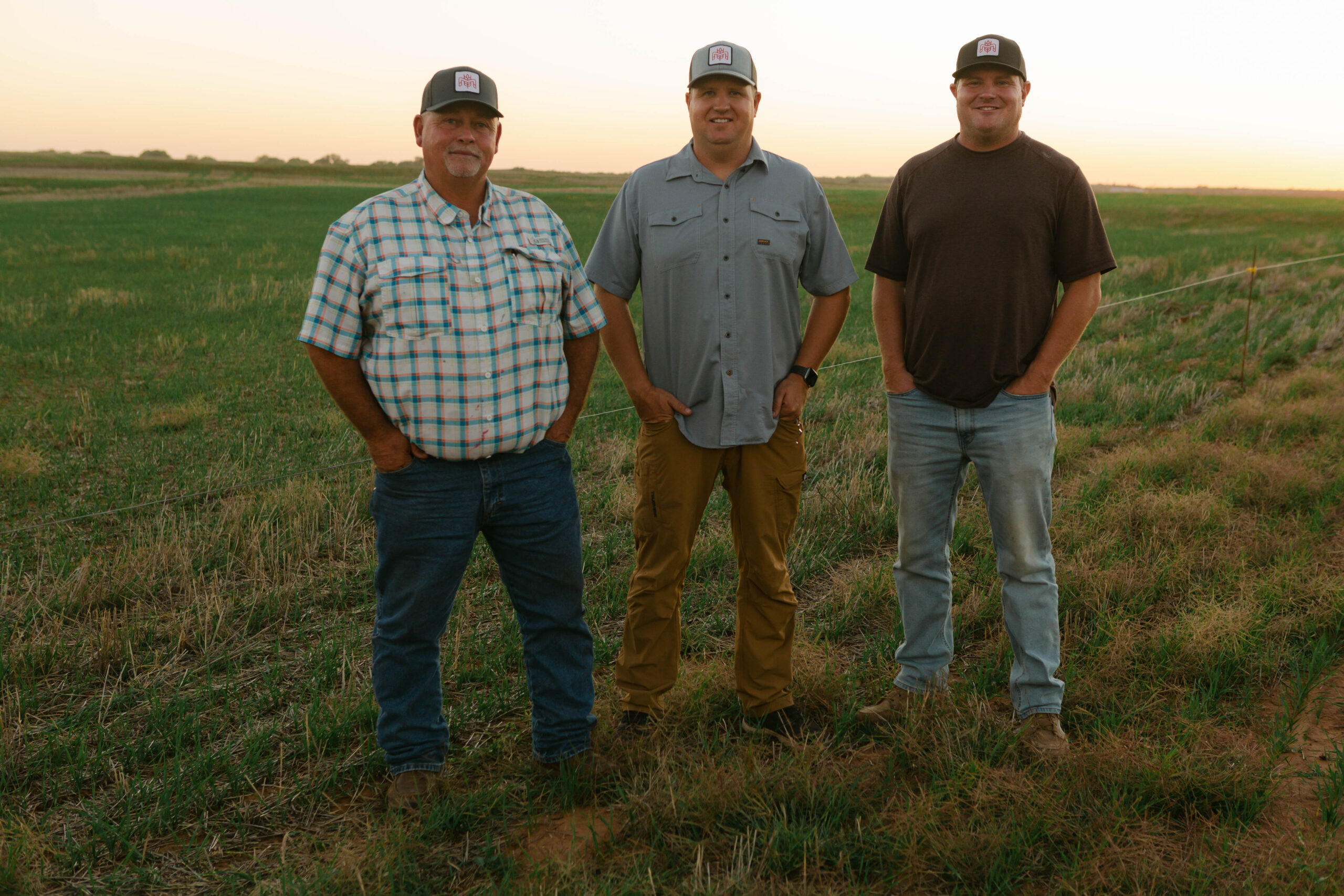
In the Central Plains wheat pasture country of Kansas, a seed dealer isn’t hard to find. It is, however, hard for a new face to stand out. Yet, five years in, Eric and Ryan Molz have found a way to do just that.
At Molz Seed, the duo follows a rule every elementary math student learns: show your work. They constantly test varieties, chemicals, seed treatments, all of it. Then they post what happens. And the phone keeps ringing.
“You probably notice on our Facebook that we show a lot of real results that we have in the field,” Ryan says.
The results bring in more than the usual customers. The marketing, Ryan says, has put the Molzes in front of people they never would have reached otherwise.
“Social media has created a way just to start a conversation. To get somebody to call you and say, ‘Oh, I saw that. Tell me more about it.’”
That openness has also put the Molzes leaps ahead of the competition down the road. When most dealers in the area offered one seed treatment, Molz Seed offered three or four, and they showed the difference in side-by-side trials.
“We showed some of the root examples. Like, look at this, right?” Ryan says. “Now you see all those other dealers copying us, pretty much doing the same thing.”
Lately, the testing has turned to seeding rates. According to Ryan, one dryland quarter of LCS Atomic AX — planted at just 35 pounds — averaged 115 bushels an acre. Their best before that was about 99. A seed dealer could use a number like that to sell more seed, but the Molzes are playing the long game. Eric says honesty with customers is what’s helped the business most.
“I would love to tell you to plant 90 pounds on your quarter, because we’re going to sell more seed,” says Eric. “But I’m just going to be honest with you and tell you exactly what we do and what works, and hope you’re back year after year.”
Ryan says that candor gets customers’ attention.
The catch, he adds, is that a lower rate works when a seed treatment makes up the difference. The same logic holds for their premium grazing wheat varieties, like LCS Cowie AX. In wheat pasture country, few dealers push it.
“I feel like a lot of people don’t really go after a lot of that,” Eric says. “That’s kind of our little niche deal.”
It isn’t the cheap option for growers who just want something to throw out and graze, but Eric says they’ll pay up once the data shows what it’ll do. The same habit shows up in the equipment in the barn. The Molzes run John Deere Operations Center on just about everything, trucks included, and Eric says they’re usually near the front of the line when something new comes out.
“We’re usually kind of the head of the pack on any of that. I feel like when it first comes out, if it makes sense, we’re kind of diving off into it pretty fast.”
The biggest recent addition is a camera-guided sprayer. Instead of blanket spraying a whole field, each nozzle only fires where it sees a weed. The Molzes ran the numbers.
“I think we figured the first year it saved us about $90,000 on chemical usage,” Ryan says.
“This year is more than that,” Eric adds.
It isn’t cheap to get started, and as far as the Molzes know, only a couple of other farms nearby have made the jump on the same equipment, but it’s worked better than they expected. Eric is watching for the next version, one that can tell rye from wheat in the crop, which he says isn’t out yet. That’s where he sees another upside: less stress on the crop.
“If you can go out and just spray 30% of the field instead of the whole thing, you’re not stressing that other 70%,” Eric explains.
Limagrain Cereal Seeds came into the picture when Molz Seed needed cleaner fields, and the pair stayed for the yield. These days they plant CoAXium varieties whether or not they plan to spray, because it beats having no answer if something flushes up.
The alternative, Eric says, is a conventional variety and a field where something unexpected rears its head. For the Molzes, the option comes with a favorite: LCS Atomic AX.
“That’s our area, man,” Ryan says. “It just performs, and you can graze it.”
Eric says LCS varieties overall are hard to beat on the yield.
“If you want to be top of the chart on the yields, I don’t know what else around here touches it,” Eric adds.
But don’t expect to catch Eric and Ryan resting on their laurels. They’ll be the first to tell you they have to chase the next thing and go bigger if they want to stay ahead.
“We have to constantly innovate. Like right now, we feel like Atomic is our workhorse. But what’s the next Atomic, right?” Ryan says. “That’s what we feel like is our job. Let’s figure that out.”
Whatever comes next, expect the same routine from the Molzes. Plant it, test it, show your work.
Connect with a local dealer like Eric and Ryan with our Dealer Finder.